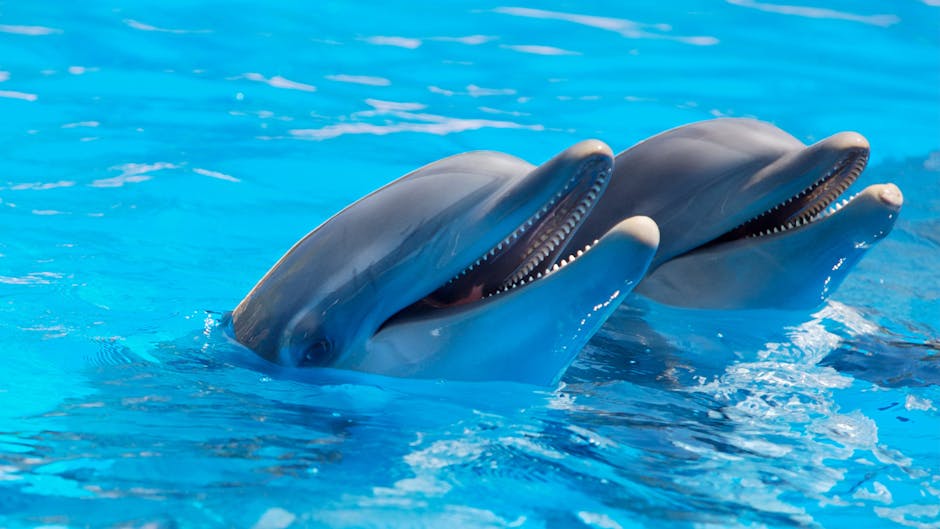

Dolphins rely on sound to navigate, hunt, and socialize. Their acoustic world is rich, precise, and essential for survival. When human-made noises enter the ocean, they interfere with these vital processes. Understanding how noise pollution disrupts dolphin communication helps researchers, policymakers, and the public see why quiet seas matter.
What types of sound do dolphins use?
Dolphins produce three main categories of vocalizations:
- Clicks – short, broadband pulses used for echolocation. A dolphin emits a click, listens for the echo, and builds a mental map of its surroundings.
- Whistles – narrow‑band, frequency‑modulated sounds that convey identity, emotional state, and social information. Signature whistles act like names.
- Burst‑pulsed sounds – rapid series of clicks and whistles used in aggressive displays or group coordination.
All three rely on a clear acoustic channel. The ocean transmits sound efficiently, but it also carries any noise that enters the water column.
Sources of anthropogenic noise in the marine environment
Human activities generate a wide range of underwater sounds. The most common sources include:
- Commercial shipping – propeller cavitation and engine vibrations create low‑frequency rumble that can travel thousands of kilometres.
- Seismic surveying – air‑gun blasts used for offshore oil and gas exploration produce intense, impulsive pulses in the 5–200 Hz range.
- Construction – pile‑driving, dredging, and offshore wind‑farm installation generate repetitive, high‑energy impacts.
- Military sonar – active sonar systems emit powerful mid‑frequency tones (1–10 kHz) for navigation and detection.
- Recreational vessels – speedboats and jet skis add localized, higher‑frequency noise that can be especially disruptive in coastal habitats.
The frequency, duration, and intensity of each source differ, but all have the potential to mask or distort dolphin vocalizations.
How noise interferes with dolphin communication
Interference can be broken down into three mechanisms: masking, behavioural disturbance, and physiological stress.
Masking of signals
Masking occurs when background noise overlaps the frequency band of a dolphin’s call, reducing signal‑to‑noise ratio (SNR). When SNR falls below a perceptual threshold, the receiver may miss or misinterpret the message.
- Spectral masking – low‑frequency ship noise can drown out the lower harmonics of clicks and some whistle components.
- Temporal masking – a loud, impulsive event (e.g., a seismic blast) can mask sounds that occur immediately before or after the pulse.
- Spatial masking – when noise originates from the same direction as the signal, dolphins must rely on subtle amplitude or timing cues that become harder to detect.
Behavioural changes
When dolphins cannot hear each other clearly, they adjust their behaviour in ways that can be costly:
- Increasing click amplitude (the Lombard effect) to overcome noise, which raises metabolic costs.
- Altering whistle structure—raising frequency or broadening bandwidth—to avoid overlap, potentially confusing conspecifics.
- Abandoning preferred foraging grounds if noise makes prey detection inefficient.
- Reducing social cohesion; groups may split or avoid close contact, which can affect mating and calf care.
Physiological stress
Persistent high‑level noise can trigger stress hormone release, dampening immune function and growth. While the exact pathways are still under study, chronic exposure is linked to reduced calf survival in several populations.
Evidence from field studies
Researchers have documented the impacts of noise on dolphins in diverse settings. Below are representative findings that illustrate the breadth of the problem.
Shipping lanes and bottlenose dolphins
In the Gulf of Mexico, bottlenose dolphins (Tursiops truncatus) inhabiting busy shipping corridors showed a 30 % reduction in whistle production compared with a quieter reference area. The same study reported a measurable shift in click source levels—dolphins increased output by up to 3 dB to maintain echolocation range.
Seismic surveys and Atlantic spotted dolphins
During offshore seismic operations off West Africa, Atlantic spotted dolphins (Stenella frontalis) temporarily ceased foraging within a 5‑km radius of the air‑gun array. After the surveys ended, foraging activity returned to baseline only after a 48‑hour lag, suggesting a lingering avoidance effect.
Naval sonar and killer dolphins
Mid‑frequency active sonar exercises in the Pacific have been linked to strandings of several species of dolphin and porpoise. Post‑mortem analyses often reveal lung hemorrhage and acoustic trauma, supporting a causal link between intense sonar pulses and acute physiological damage.
Why some noises are more harmful than others
The impact of a noise source depends on three interrelated factors:
- Frequency overlap – Dolphin clicks peak between 40–150 kHz, while whistles sit mainly between 5–30 kHz. Low‑frequency noise (10–500 Hz) mainly masks the low end of whistles, whereas mid‑frequency sonar (1–10 kHz) can directly interfere with many whistles and the early part of click reverberations.
- Amplitude and duration – A short, extremely loud blast can cause immediate hearing loss, while continuous moderate noise can cause chronic masking.
- Spatial distribution – Noise that spreads over a large area (e.g., shipping) creates a persistent acoustic “fog,” while localized construction may affect only a specific habitat patch.
How dolphins adapt—or fail to adapt—to noisy environments
Adaptation is not guaranteed. Some populations show flexibility, while others show signs of stress that could affect long‑term viability.
Behavioural plasticity
In the Mediterranean, common dolphins (Delphinus delphis) have been observed shifting their activity to nighttime, when ship traffic diminishes. This temporal shift reduces exposure but also limits foraging to periods when prey may be less abundant.
Physiological limits
Marine mammals possess a range of hearing thresholds, but they cannot simply “tune out” intense, low‑frequency noise without risking permanent threshold shifts. Repeated exposure can lead to permanent hearing loss, eliminating the possibility of later acoustic compensation.
Population‑level consequences
When an entire community experiences chronic noise, reproductive success may decline. In the North Atlantic, a longitudinal study linked increased commercial traffic with a measurable drop in calf birth rates among Atlantic white‑sided dolphins (Lagenorhynchus acutus). The mechanism appears to involve both reduced foraging efficiency and elevated stress hormones.
Mitigation strategies in practice
Reducing the impact of noise does not require eliminating all human activity at sea, but it does demand targeted measures.
Technological solutions
- Quiet‑propeller designs – Modifying blade shape reduces cavitation, lowering low‑frequency emissions.
- Air‑gun soft‑start procedures – Gradually increasing pulse intensity allows marine mammals to vacate the area before full‑power blasts.
- Bubble curtains – Submerged air‑filled barriers dampen the transmission of construction noise, especially for pile‑driving.
- Low‑frequency sonar alternatives – Using higher frequency, lower‑amplitude tones can achieve similar detection goals with less overlap with dolphin hearing.
Regulatory and management approaches
- Protected acoustic zones – Designating marine areas where high‑impact activities are prohibited during critical periods (e.g., breeding season).
- Speed limits for vessels – Reducing vessel speed decreases propeller noise and also lowers collision risk.
- Seasonal restrictions on seismic surveys – Aligning survey windows with periods of low dolphin presence minimizes disturbance.
- Real‑time acoustic monitoring – Deploying hydrophone arrays that trigger automatic shutdown or mitigation when dolphin vocalizations are detected.
Community and stakeholder involvement
Effective mitigation often hinges on collaboration. Coastal fishery cooperatives, tourism operators, and naval agencies can share acoustic data, coordinate activity calendars, and adopt best‑practice guidelines. When stakeholders see tangible benefits—such as fewer vessel strikes or improved dolphin‑watching experiences—participation becomes more sustainable.
Future research directions
While the evidence base is growing, gaps remain that limit precise management.
- Long‑term acoustic baselines – Establishing reference soundscapes helps distinguish anthropogenic changes from natural variability.
- Individual hearing thresholds – Non‑invasive techniques to estimate hearing loss in wild dolphins would clarify the cumulative impact of chronic noise.
- Energetic cost modelling – Quantifying how increased click amplitude translates into metabolic expenditure can link noise exposure to population dynamics.
- Cross‑species comparative studies – Understanding why some dolphin species cope better than others can inform species‑specific mitigation.
Key takeaways for readers
Noise pollution is not a vague concept; it is a measurable, scientifically documented stressor that interferes with the fundamental ways dolphins communicate.
- Dolphins rely on clicks and whistles that occupy specific frequency bands; overlapping human sounds mask these signals.
- Masking leads to behavioural changes, higher energy use, and possible loss of vital social information.
- Evidence from multiple regions shows reduced foraging, altered social structure, and, in extreme cases, mass strandings linked to intense noise.
- Mitigation is possible through technology, regulation, and cooperative management, but success depends on reliable monitoring and adaptive policies.
Recognising the acoustic needs of dolphins is a first step toward protecting their populations while maintaining responsible ocean use.